Currently Empty: $0.00
Digital Publishing
E-Books: Unleashing the Flow of Knowledge Across Time and Space

From the earliest days of human civilization, the quest to record, preserve, and share knowledge has driven innovation in communication and publishing. The journey of human media evolution is essentially a process of breaking through the limitations of time and space to realize the free flow of knowledge. From primitive recording tools to modern digital platforms, each iteration of the medium has pushed the boundary of knowledge dissemination further.

The Origin of Knowledge Recording: Primitive Media Laying the Foundation
The journey of human media began with cave paintings etched onto stone walls, followed by oracle bones inscribed with primitive characters to document events and divinations. These early forms of knowledge storage, though fragile and with extremely limited dissemination scope, marked the first steps in humanity’s desire to transmit ideas across generations. They realized the initial transformation of knowledge from oral transmission to tangible recording, laying the primitive foundation for the subsequent inheritance and development of human civilization.
The Evolution of Ancient Knowledge Media: Breaking Through Early Dissemination Barriers
As societies evolved, so did the mediums of knowledge. The ancient Chinese developed bamboo slips and silk manuscripts, enabling scholars and officials to record literature, history, and science on a larger scale. Meanwhile, innovations in the Middle East and Europe introduced papyrus scrolls and parchment, providing more portable and durable ways to archive information compared to stone and bone materials.
Each advancement in this period significantly improved the speed and accessibility of knowledge dissemination. It made knowledge no longer confined to a small number of tribal leaders or priests, but gradually spread among scholars and the upper classes, laying the foundation for broader literacy and the initial accumulation of academic knowledge.
Revolutionary Leaps in the Pre-Modern Era: Paper and Printing Changing the Pattern of Knowledge Dissemination
The invention of paper in the 2nd century BCE and later movable type printing by Johannes Gutenberg in the 15th century marked revolutionary leaps in human communication. Paper, with its low cost and easy availability, replaced the expensive and cumbersome bamboo slips, silk, and parchment, becoming the mainstream carrier of knowledge. Movable type printing, on the other hand, realized the mass production of books, breaking the monopoly of manual copying.
Suddenly, ideas could travel farther, faster, and more reliably than ever before. Books transformed from rare treasures accessible only to the privileged to widespread tools of education, research, and cultural exchange. Knowledge was no longer confined to local communities—it became a shared, global resource, driving the vigorous development of the Renaissance, the Enlightenment, and various scientific and technological revolutions.
The Digital Era: E-Books and Self-Publishing Platforms Reaching the Pinnacle of Knowledge Dissemination
Today, the evolution of publishing has reached a new pinnacle: e-books and digital self-publishing platforms. The shift from physical to digital media has completely broken traditional barriers of space, cost, and time. Knowledge can now flow instantly from a creator in one corner of the world to a reader thousands of miles away, realizing real-time cross-border dissemination.

Digital books, accessible on tablets, smartphones, and computers, have not only reduced the reading threshold for users but also allowed authors to publish their ideas without the need for expensive printing, distribution, or inventory management. This fundamental change has made the dissemination of knowledge more efficient and low-cost, opening a new era for the popularization of knowledge.
eBooksForest: Empowering the Free Flow of Knowledge in the Digital Age
eBooksForest exemplifies this modern revolution. As a global digital self-publishing platform, it empowers anyone with knowledge, creativity, or talent to publish instantly, breaking the long-standing monopoly of traditional publishing houses and giving ordinary creators the right to spread their ideas.
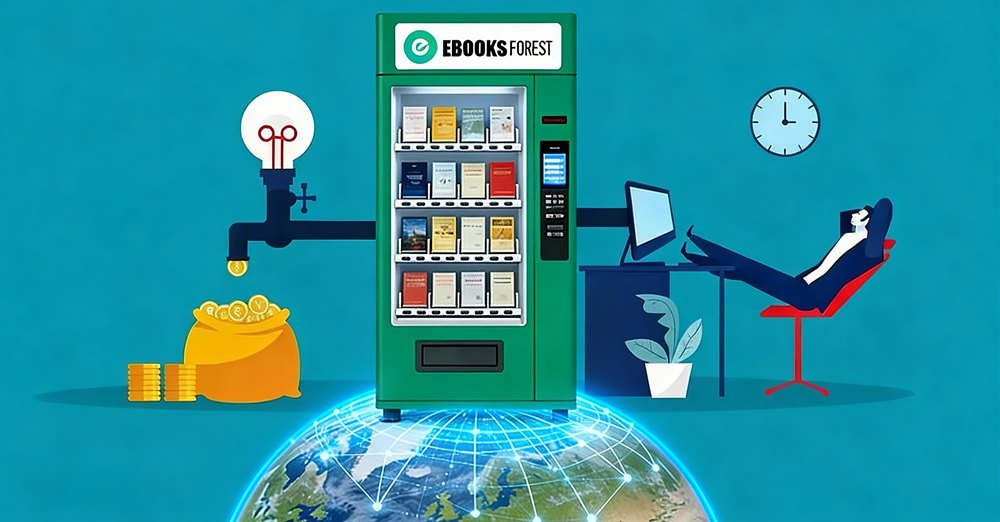
By leveraging its H5-based, SEO-friendly, and cross-device platform, authors can reach a worldwide audience without traditional publishing constraints. The platform’s structure supports multimedia content, interactive chapters, and continuous updates, creating a full-cycle knowledge monetization system that not only helps creators disseminate knowledge but also enables them to gain reasonable returns from their creations, forming a positive cycle of knowledge creation and dissemination.

With eBooksForest, the barriers to entry are minimized—authors can publish at zero cost, bypassing printing, shipping, and marketing expenses that once deterred many potential creators. Knowledge creators, educators, and innovators can now turn their expertise into tangible value, sharing insights in real time, across time zones, and continents.
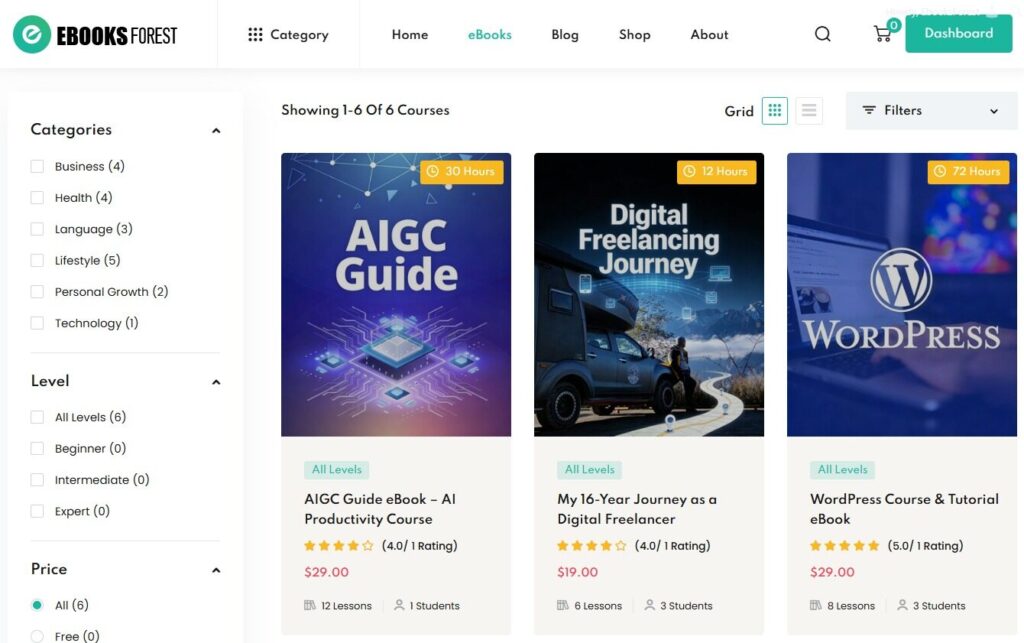
Whether it’s a research guide, an educational course, a novel, or a niche professional handbook, eBooksForest ensures that knowledge flows freely and reaches the audience it deserves, maximizing the value of each piece of knowledge.
Conclusion: The Endless Journey of Knowledge Dissemination
From cave paintings to electronic books, humanity’s history is a story of unremittingly expanding the reach and efficiency of knowledge. Today, digital self-publishing represents the ultimate realization of this goal: universal access, instantaneous distribution, and seamless monetization.
eBooksForest is at the forefront of this wave, enabling the next generation of creators to make their ideas matter—anytime, anywhere, globally. As technology continues to advance, the flow of knowledge will surely become more free and efficient, contributing to the continuous progress of human civilization.
Author Profile

- Sean Lee - Founder of the eBooksForest platform, a 16-year veteran freelancer and digital nomad, and an expert in knowledge-based digital publishing.
Latest entries
 Digital PublishingJanuary 23, 2026Free eBook Publishing Sites: How to Publish and Distribute Your eBook at No Cost
- Ebook WritingJanuary 22, 2026Why We Still Need E-books in the AI Era: 6 Truths About Knowledge Assetization
- Ebook WritingJanuary 21, 2026《The Psychology of Money》Morgan Housel on Writing: Why Everyone Should Learn to Write Clearly
- Ebook CreationJanuary 20, 2026How to Create an eBook to Sell: A Complete Guide for Independent Authors