Currently Empty: $0.00
Digital Publishing
Digital Publishing: Empowering Everyone with the Freedom to Publish

From High Barriers to One-Click Publishing in the Creator Economy
What Is Publishing? The Essence and Purpose of Publishing
At its core, publishing is the structured process of organizing, reproducing, and distributing ideas, knowledge, experience, and content so that they can be seen, read, understood, and used by the public.
Throughout history, publishing has consistently served three fundamental purposes:
- Dissemination of Knowledge and Ideas
Enabling thoughts, expertise, and cultural achievements to transcend time and geography. - Establishing Authority and Influence
Published works serve as tangible proof of credibility, professionalism, and intellectual value. - Monetization of Content
Transforming knowledge and creativity into sustainable economic returns.
Regardless of the era, the essence of publishing has always been the same:
to be discovered, to be read, and to generate value.
The Evolution of Publishing: From Scarce Privilege to Universal Access
1. Early Publishing: Oracle Bones and Bamboo Slips — A Privilege of the Few
In early human civilization, publishing materials themselves were extremely scarce.
- Oracle bone inscriptions recorded royal decisions and religious rituals
- Bamboo slips and silk manuscripts were expensive and difficult to preserve
- Publishing was controlled by those with political, religious, or economic power
At this stage, publishing was an instrument of authority, not personal expression.
2. Movable Type Printing: Mass Production, Yet High Barriers Remained
The invention of movable type printing marked a major milestone in publishing history by dramatically increasing reproduction efficiency.
However, publishing still required:
- Printing equipment and paper costs
- Editing, proofreading, and layout expertise
- Distribution networks and bookstores
- Institutional approval and publishing licenses such as ISBN
Publishing remained a domain dominated by professional institutions rather than individuals.
3. The Traditional Publishing Era: More Efficient, Still Restrictive
In the modern publishing system, authors typically faced:
- Lengthy submission and review cycles
- Editorial gatekeeping driven by market considerations
- Low royalty rates and delayed payouts
- Limited creative and commercial control
Many high-quality ideas never reached readers—not due to lack of value, but due to structural barriers.
The Rise of Digital Publishing: True Freedom for Every Creator
The maturity of the internet and digital technologies fundamentally transformed the publishing landscape.
Digital publishing broke through traditional constraints by eliminating:
- Dependence on physical printing
- Geographic distribution limitations
- High upfront production costs
- Institutional gatekeeping
Platforms such as eBooksForest represent a turning point where publishing becomes:
Low-cost, low-barrier, high-efficiency, and creator-owned.
Digital Publishing vs Traditional Publishing: Key Differences
| Dimension | Traditional Publishing | Digital Publishing |
|---|---|---|
| Entry Barrier | High | Extremely Low |
| Upfront Cost | Significant | Near Zero |
| Publishing Speed | Months or Years | Hours or Days |
| Creative Control | Publisher-led | Fully Author-Owned |
| Revenue Model | Low royalties, slow payouts | High margins, fast settlements |
| Global Reach | Limited | Built-in Global Distribution |
ISBN numbers are merely a formality.
The true purpose of publishing is value exchange—and digital publishing fulfills it more efficiently.
eBooksForest: Making Digital Publishing Truly One-Click
Among digital publishing platforms, eBooksForest is not just an eBook marketplace—it is a complete digital publishing infrastructure designed for creators.
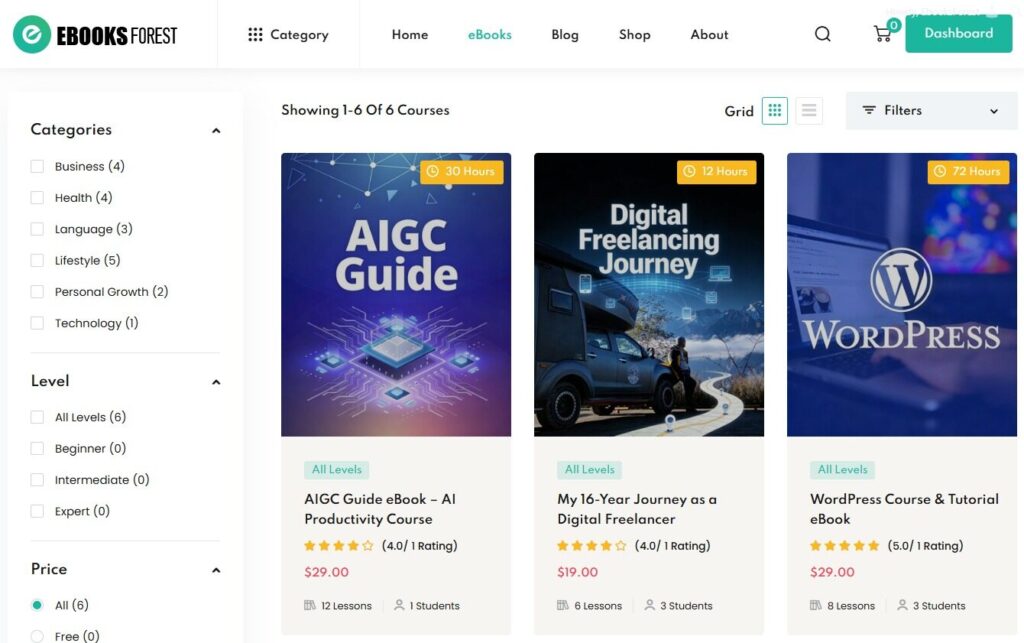
1. From Writing to Publishing: A Streamlined Workflow
With eBooksForest, authors can:
- Upload their eBook content
- Set pricing and product descriptions
- Publish instantly for global distribution
No printing, no inventory, no licensing requirements.
2. Built-In Marketing and Discoverability
Publishing alone is not enough—visibility is everything.
eBooksForest is inherently optimized for:
- Search engine visibility (SEO-friendly structure)
- Long-term organic traffic accumulation
- Sustainable content asset growth
Each eBook becomes a long-term digital asset, not a one-time product.
3. Automated Monetization: Content as a Business
Through eBooksForest, creators benefit from:
- Automated sales and digital delivery
- Transparent revenue tracking
- Efficient and reliable payout systems
You are no longer “selling a book”—you are operating a content-based business system.
4. From Writer to Independent Publisher
Digital publishing fundamentally reshapes the creator’s role:
- From “manuscript submitter” to independent publisher
- From “content creator” to content owner
- From one-off releases to compounding digital assets
This is the true freedom that digital publishing delivers.
The Future of Digital Publishing: Content as a Long-Term Asset
In an era shaped by AI, remote work, the creator economy, and knowledge monetization:
- Content is becoming one of the most resilient personal assets
- Publishing is no longer an endpoint, but a starting point
- A single eBook can evolve into courses, consulting, communities, and services
Digital publishing is the foundation of sustainable personal value creation.
Conclusion: The Power of Publishing Is Returning to Individuals
From oracle bones to movable type, from publishing houses to digital platforms, the history of publishing is ultimately a story of:
Lower barriers, broader participation, and greater individual empowerment.
Today, with platforms like eBooksForest:
- Writing becomes more than expression
- Publishing becomes accessible to everyone
- Content transforms into scalable, long-term income
Digital publishing is empowering everyone with the freedom to publish.
Author Profile

- Sean Lee - Founder of the eBooksForest platform, a 16-year veteran freelancer and digital nomad, and an expert in knowledge-based digital publishing.
Latest entries
 Digital PublishingJanuary 23, 2026Free eBook Publishing Sites: How to Publish and Distribute Your eBook at No Cost
- Ebook WritingJanuary 22, 2026Why We Still Need E-books in the AI Era: 6 Truths About Knowledge Assetization
- Ebook WritingJanuary 21, 2026《The Psychology of Money》Morgan Housel on Writing: Why Everyone Should Learn to Write Clearly
- Ebook CreationJanuary 20, 2026How to Create an eBook to Sell: A Complete Guide for Independent Authors