Currently Empty: $0.00
Case Studies
James Clear’s Writing Philosophy: How an Ordinary Writer Built Extraordinary Long-Term Success

In the world of modern nonfiction writing, James Clear is a name that cannot be ignored.
His book Atomic Habits has sold more than ten million copies worldwide, has been translated into over 50 languages, and has remained on Amazon and The New York Times bestseller lists for years.
However, what truly deserves attention is not just the book itself, but the writing system James Clear spent more than a decade building before the book was ever published.
His success did not come from a burst of inspiration. It came from a repeatable, scalable, and sustainable writing methodology.
From Obscurity to Global Bestseller: The Real Starting Point of James Clear
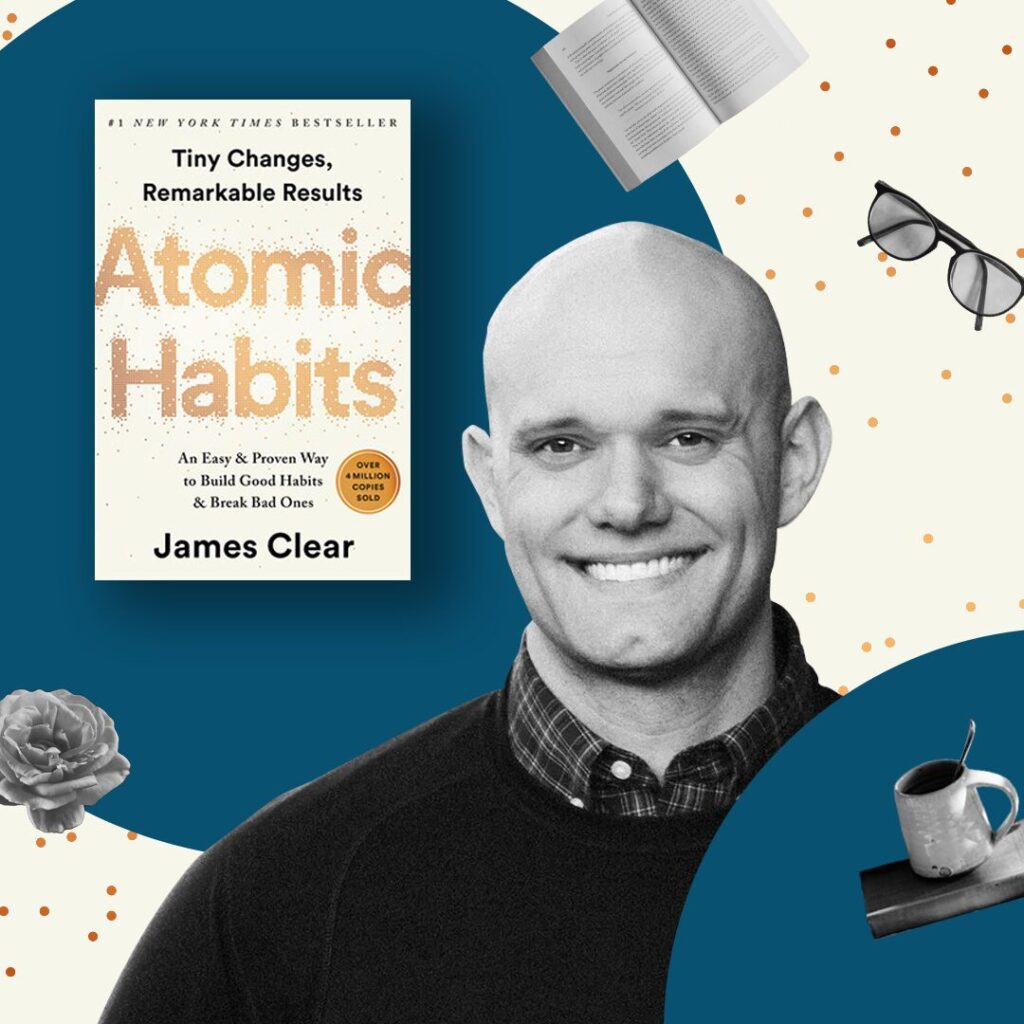
Many people assume James Clear was an “overnight success.” In reality, before Atomic Habits was published, he had already:
- Written consistently for nearly 10 years
- Published high-quality articles every week
- Built an email list with over one million subscribers
- Studied behavioral science, habit formation, and decision-making in depth
At the beginning, his goal was not to write a book.
His real goal was much simpler—and far more powerful:
Create content with lasting value that people would continue to search for, share, and reference over time.
Four Core Reasons Behind James Clear’s Writing Success
1. He Reduces Cognitive Load Instead of Showing Off Ideas
James Clear does not invent new theories. What he does exceptionally well is:
- Translate complex behavioral science
- Into practical actions ordinary people can apply
- And present them with extreme clarity and structure
One defining characteristic of his writing is this:
Almost any paragraph can stand alone, be understood independently, and be quoted or shared.
This makes his content naturally compatible with search engines, social platforms, and long-term distribution.
2. Long-Term Thinking: Writing 1,000 Articles Before Writing One Book
Before Atomic Habits, James Clear had already published thousands of articles.
These were not “drafts” or disposable content. They became:
- Prototypes for book chapters
- Market-validated ideas proven by readers
- Long-term sources of organic search traffic
This meant the book had already been validated before it existed.
That is why Atomic Habits exploded immediately after launch, rather than relying on aggressive short-term marketing.
3. Structured Writing, Not Inspiration-Based Writing
James Clear strongly believes in structure.
In his content:
- Titles are designed for clarity and shareability
- Paragraphs are modular
- Ideas can be split, reorganized, and reused
This allows his writing to move seamlessly across formats:
- Blog posts
- Email newsletters
- Social media excerpts
- Talks and workshops
- Book chapters
This is system-driven content creation, not emotional or inspiration-dependent writing.
4. Treating Writing as an Asset, Not a One-Time Product
In James Clear’s system:
- Every article is a long-term asset
- Content continuously attracts readers and builds trust
- Books are simply a concentrated form of accumulated value
This is why his influence continues to grow instead of fading after a single bestseller.
What James Clear’s Writing Teaches Ordinary Creators
His journey proves three essential truths:
- You don’t need writing talent—you need consistency
- Structure matters more than literary style
- True creative freedom comes from systems, not inspiration
In an age of AI and content overload, material that remains searchable, readable, and referenceable over time must be clear, structured, and reusable.
Why James Clear’s Model Is Even More Relevant Today
Modern creators face three harsh realities:
- Platform algorithms are unpredictable
- Traffic is volatile
- Content life cycles are increasingly short
James Clear’s approach is the opposite:
- Platform-independent
- Search-engine focused
- Designed for long-term reading
- Built for knowledge accumulation
This is why more creators are turning to eBooks, structured knowledge products, and independent publishing systems.
eBooksForest: Turning Writing Into Long-Term Discoverable Assets
If James Clear’s success comes from turning writing into a system,
eBooksForest is a platform designed for exactly this kind of creator.
With eBooksForest, you can:
- Organize articles, tutorials, and courses into structured eBooks
- Publish using H5 web standards, making content SEO-friendly by default
- Be indexed by Google and referenced by AI models
- Combine text, audio, video, quizzes, and interactive elements
- Keep content accessible, updatable, and monetizable over time
This is not one-time publishing—it is long-term knowledge asset building.
Conclusion: Writing Is Not a Viral Game—It Is Compound Interest Over Time
James Clear’s career demonstrates one fundamental truth:
The real returns of writing do not come from a single article, but from a system sustained over time.
If you are writing, planning to write, or aiming to transform knowledge into durable assets,
what you need is not another platform—but a publishing system built for longevity, discovery, and compounding value.
That is exactly where eBooksForest belongs.
Author Profile

- Sean Lee - Founder of the eBooksForest platform, a 16-year veteran freelancer and digital nomad, and an expert in knowledge-based digital publishing.
Latest entries
 Digital PublishingJanuary 23, 2026Free eBook Publishing Sites: How to Publish and Distribute Your eBook at No Cost
- Ebook WritingJanuary 22, 2026Why We Still Need E-books in the AI Era: 6 Truths About Knowledge Assetization
- Ebook WritingJanuary 21, 2026《The Psychology of Money》Morgan Housel on Writing: Why Everyone Should Learn to Write Clearly
- Ebook CreationJanuary 20, 2026How to Create an eBook to Sell: A Complete Guide for Independent Authors