Currently Empty: $0.00
Ebook News
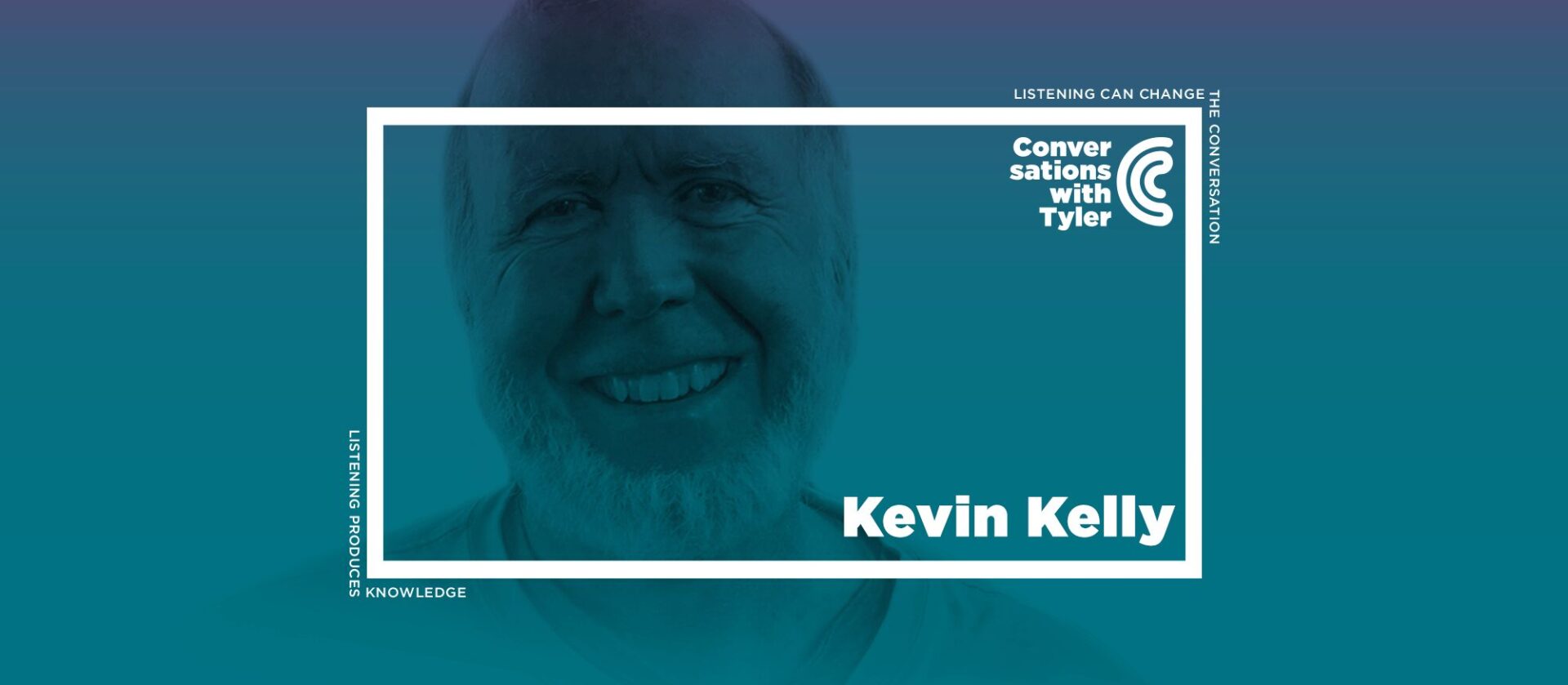
Kevin Kelly on Writing:Why Most Content Lacks Penetration
How to Be Truly Remembered?
In an age of overwhelming content abundance, most writing is not bad — it is simply ignored.
It is logically sound, factually correct, and well-structured, yet it fails to make readers pause, reflect, or change their minds. It leaves no trace.
Kevin Kelly — founding editor of Wired, futurist, and author of Out of Control and The Inevitable — offers a sharp and uncomfortable explanation for this phenomenon:
Content lacks penetration not because of poor skill, but because its most valuable part has been removed.
This article distills Kevin Kelly’s thinking on writing and creation, and addresses a fundamental question:
Why does so much “correct” content fail to make an impact?
1. Writing, for Kevin Kelly, Is Not a Technical Problem
Kevin Kelly rarely talks about rhetoric, sentence structure, or stylistic tricks.
For him, writing is first a way of thinking, and only then a way of expressing.
One principle runs consistently through his work:
Writing is the compression of long-term experience into reusable judgment.
This explains why many of his most influential pieces take the form of concise principles, aphorisms, or distilled advice — not because he favors brevity, but because he values high-density thinking.
2. Why Most Content Has No Penetrating Power
1️⃣ The real problem is not poor writing, but excessive safety
Kevin Kelly repeatedly points out:
If everything you say is already agreed upon by most people, you are not creating value — you are repeating consensus.
Many creators unconsciously fall into these traps:
- Trying to be acceptable to everyone
- Avoiding disagreement or tension
- Using neutral, cautious, averaged language
The result is predictable:
Content becomes smooth, forgettable, and interchangeable.
Readers do not dislike it — they simply do not remember it.
2️⃣ Information does not penetrate; judgment does
Kelly draws a clear distinction between two kinds of content:
Information
- Objective
- Easily replaceable
- Abundant and searchable
Judgment
- Rooted in personal experience
- Costly in time, mistakes, or sacrifice
- Impossible to fully copy
Information tells people what is known.
Judgment changes how people think.
Most content that lacks penetration is informational — not judgment-based.
3. A Hard Truth:
What You Delete Is Often the Most Valuable Part
According to Kevin Kelly, nearly all writers make the same mistake during editing:
They remove the most personal, controversial, and non-universal parts of their work.
What gets deleted?
- Failures
- Wrong decisions
- Expensive lessons
- Conclusions that challenge mainstream beliefs
The reasons seem reasonable:
- “Not professional enough”
- “Not broadly applicable”
- “Too subjective”
But Kelly’s view is uncompromising:
Those removed sections are your only irreplaceable value.
4. Kevin Kelly’s Definition of “Penetrating Content”
Penetration is not:
- Page views
- Likes or shares
- Short-term virality
For Kevin Kelly, truly penetrating content does at least one thing:
It changes something the reader previously believed.
Even slightly.
It may cause a reader to think:
- “I’ve never considered it this way.”
- “I didn’t realize my assumption was wrong.”
- “This finally articulates something I felt but couldn’t express.”
If no mental shift occurs, the content is simply noise.
5. Three Questions Kevin Kelly Would Ask Every Writer
If you suspect your writing lacks impact, Kelly’s framework can be reduced to three self-tests:
1️⃣
If my name were removed, who else could have written this?
If the answer is “almost anyone,”
the content has little long-term value.
2️⃣
Have I clearly stated what I disagree with?
Content that opposes nothing
is rarely remembered by anyone.
3️⃣
Does this piece contain experiences that cost me something?
Cost may include:
- Time
- Money
- Failure
- Irreversible choices
Opinions without cost rarely penetrate.
6. Writing Is Action, Not Waiting for Inspiration
Kevin Kelly strongly rejects the idea of waiting for inspiration:
Writing begins with action, not with readiness.
His practice reflects this belief:
- Write the imperfect first draft
- Separate creation from evaluation
- Refine thinking through revision
Writing, in this view, is not a mood —
it is a long-term habit.
7. Why Kevin Kelly Is Skeptical of Trend-Chasing Content
Kelly consistently favors long-term thinking over short-term attention:
- Trending content captures temporary interest
- Judgment-based content compounds over time
He advocates writing that:
- Does not depend on current hype
- Produces ideas that remain useful years later
Such content may spread slowly,
but it continues to be discovered, cited, and shared.
Conclusion: Writing Is a Form of Responsibility
Kevin Kelly’s philosophy ultimately leads to a simple but demanding conclusion:
Content gains penetration only when it is built on judgments you were willing to pay for.
When you begin to:
- Write from lived experience rather than summaries
- Take a clear position instead of pleasing everyone
- Accept being disliked rather than ignored
Your writing starts to matter.
This is not merely a writing strategy —
it is a long-term path to meaningful creation and lasting influence.
Author Profile

- Sean Lee - Founder of the eBooksForest platform, a 16-year veteran freelancer and digital nomad, and an expert in knowledge-based digital publishing.
Latest entries
 Digital PublishingJanuary 23, 2026Free eBook Publishing Sites: How to Publish and Distribute Your eBook at No Cost
- Ebook WritingJanuary 22, 2026Why We Still Need E-books in the AI Era: 6 Truths About Knowledge Assetization
- Ebook WritingJanuary 21, 2026《The Psychology of Money》Morgan Housel on Writing: Why Everyone Should Learn to Write Clearly
- Ebook CreationJanuary 20, 2026How to Create an eBook to Sell: A Complete Guide for Independent Authors