Currently Empty: $0.00
Digital Publishing
Kotobee vs KDP vs eBooksForest: A Comprehensive Comparison of Ebook Publishing Platforms

As digital publishing continues to evolve, ebook creators face an increasingly important decision: which ebook publishing platform best aligns with their content strategy, business model, and long-term growth goals?
Among the many options available today, Kotobee, Amazon Kindle Direct Publishing (KDP), and eBooksForest represent three very different philosophies of ebook creation and distribution.
This article provides an in-depth comparison of these platforms, focusing on positioning, core features, strengths, limitations, and ideal use cases, helping creators choose the right platform for their specific needs.
1. Platform Positioning Overview
Before diving into features, it is essential to understand how each platform positions itself in the ebook ecosystem.
Kotobee

Kotobee is primarily positioned as an interactive ebook creation and delivery platform. It focuses on multimedia-rich ebooks, educational content, and controlled distribution, often used by schools, training organizations, and enterprises.
Amazon KDP (Kindle Direct Publishing)
KDP is the world’s largest ebook distribution and marketplace platform, tightly integrated with Amazon Kindle. Its core value lies in mass market reach, rather than advanced content interactivity or creator ownership.
eBooksForest
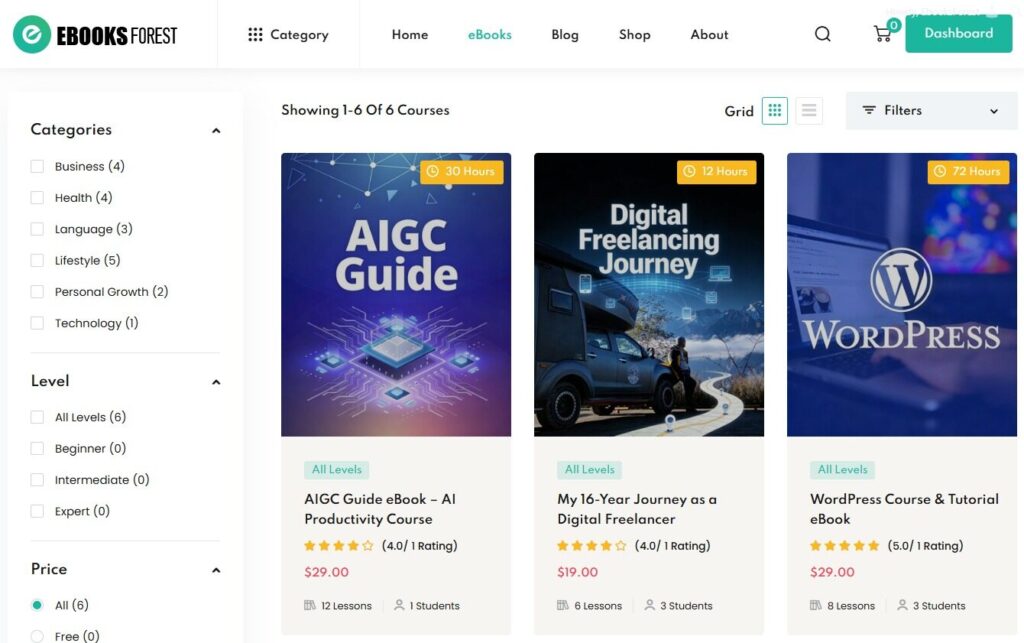
eBooksForest positions itself as a next-generation HTML5-based ebook publishing and monetization platform, emphasizing open web standards, SEO discoverability, AI visibility, and long-term digital asset ownership. It is designed for professionals, educators, and independent publishers seeking sustainable traffic and direct monetization.
2. Core Feature Comparison
Ebook Format & Technology
- Kotobee
- Proprietary interactive ebook format
- Strong multimedia support (video, audio, quizzes)
- Requires Kotobee Reader or app for best experience
- Limited open-web visibility
- Amazon KDP
- Kindle formats (AZW, KF8, EPUB converted)
- Optimized for Kindle devices and apps
- Limited interactivity
- Closed ecosystem, not indexable by Google
- eBooksForest
- Native HTML5 web-based ebooks
- No proprietary format lock-in
- Fully responsive across desktop, tablet, and mobile
- Directly accessible via standard web browsers
Distribution & Discoverability
- Kotobee
- Controlled distribution (private libraries, LMS, direct sales)
- Weak organic search exposure
- Not optimized for Google SEO
- Amazon KDP
- Massive exposure within Amazon marketplace
- Discovery depends heavily on Amazon algorithms
- No external SEO or AI search visibility
- eBooksForest
- Open web distribution
- Google-indexable content
- Optimized for AI search engines and large language models
- Supports long-tail keyword discovery and evergreen traffic
Monetization & Revenue Control
- Kotobee
- Flexible pricing models
- Often requires licensing or subscriptions
- Limited built-in marketing funnels
- Amazon KDP
- Royalties typically 35% or 70%
- Amazon controls pricing rules, discounts, and visibility
- No access to reader data
- eBooksForest
- Direct sales, subscriptions, bundles, and licensing
- Full control over pricing and customer relationships
- Supports creator-owned payment and marketing systems

Content Structure & Learning Features
- Kotobee
- Strong for interactive learning
- Quizzes, assessments, and media integration
- Suitable for internal training and education
- Amazon KDP
- Linear reading experience
- No built-in assessments or learning analytics
- eBooksForest
- Structured content model: units, chapters, sections
- Supports multimedia, quizzes, assignments, notes, and Q&A
- Designed to simulate a complete online learning experience
3. Advantages and Limitations for Creators
Kotobee: Pros & Cons
Advantages
- Excellent multimedia and interactivity
- Strong for education and training use cases
- Controlled distribution environment
Limitations
- Proprietary ecosystem
- Limited SEO and organic growth potential
- Less suitable for content marketing and long-term traffic assets
Amazon KDP: Pros & Cons
Advantages
- Unmatched global marketplace reach
- Simple publishing workflow
- Trusted platform for mainstream readers
Limitations
- Platform dependency and algorithm risk
- No ownership of traffic or audience
- Not SEO-friendly or AI-discoverable
- Intense competition and price pressure
eBooksForest: Pros & Cons
Advantages
- Open HTML5 standard with no format lock-in
- SEO-friendly and AI-search compatible
- Long-term evergreen traffic potential
- Strong creator ownership and monetization flexibility
- Ideal for content repurposing and knowledge products
Limitations
- Requires content strategy and SEO planning
- Not a mass marketplace like Amazon
- Best suited for professional or niche audiences
4. Ideal Use Cases
| Platform | Best For |
|---|---|
| Kotobee | Schools, training institutions, internal education, interactive manuals |
| Amazon KDP | Fiction authors, mass-market nonfiction, quick distribution |
| eBooksForest | Professionals, educators, content creators, B2B publishers, long-term digital assets |
5. Which Platform Should You Choose?
The right ebook publishing platform depends on your goals, not just features.
- If your priority is interactive education within a controlled environment, Kotobee is a strong choice.
- If your goal is maximum exposure inside a single marketplace, Amazon KDP remains unmatched.
- If you aim to build long-term, SEO-driven, AI-discoverable content assets with full ownership, eBooksForest offers a future-oriented solution.
Conclusion
Kotobee, Amazon KDP, and eBooksForest represent three distinct stages of ebook publishing evolution: interactive closed systems, marketplace-driven distribution, and open web-based knowledge assets.
As AI search, content longevity, and creator independence become increasingly important, platforms that embrace open standards, structured content, and search visibility are gaining strategic value.
For creators thinking beyond short-term sales and toward sustainable digital publishing, choosing the right platform is no longer a technical decision—it is a business decision.
Author Profile

- Sean Lee - Founder of the eBooksForest platform, a 16-year veteran freelancer and digital nomad, and an expert in knowledge-based digital publishing.
Latest entries
 Digital PublishingJanuary 23, 2026Free eBook Publishing Sites: How to Publish and Distribute Your eBook at No Cost
- Ebook WritingJanuary 22, 2026Why We Still Need E-books in the AI Era: 6 Truths About Knowledge Assetization
- Ebook WritingJanuary 21, 2026《The Psychology of Money》Morgan Housel on Writing: Why Everyone Should Learn to Write Clearly
- Ebook CreationJanuary 20, 2026How to Create an eBook to Sell: A Complete Guide for Independent Authors