Currently Empty: $0.00
Ebook Writing
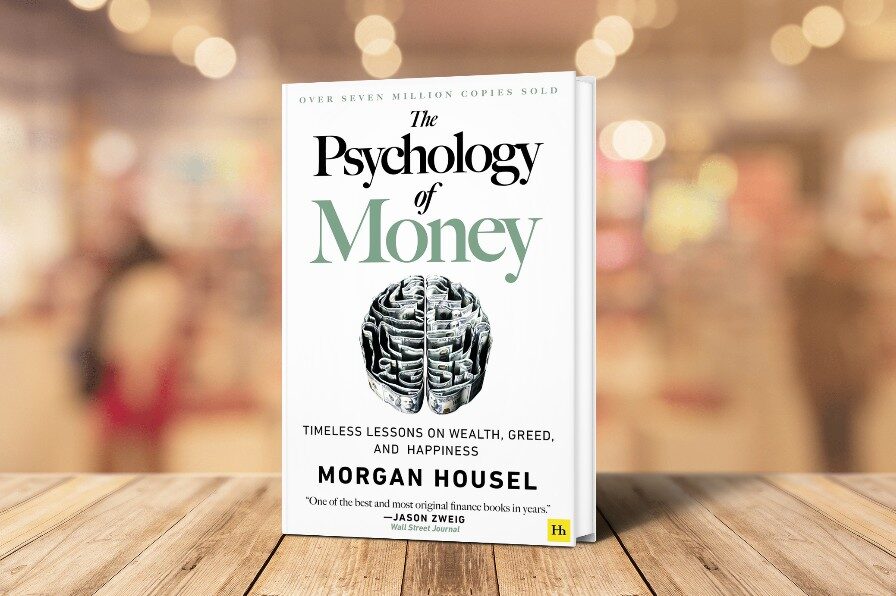
《The Psychology of Money》Morgan Housel on Writing: Why Everyone Should Learn to Write Clearly

Morgan Housel, the author of The Psychology of Money, believes that writing is not just for writers—it is a fundamental thinking skill everyone should practice.

Formerly a columnist at The Wall Street Journal, Housel published The Psychology of Money in 2020. Since then, the book has been translated into more than 50 languages and sold over eight million copies worldwide, making it one of the most influential personal finance books of the past decade.
Housel often quotes Voltaire’s famous line:
“History never repeats itself. Man always does.”
In his view, this insight is especially true when it comes to money. Financial behavior rarely changes, because human psychology rarely changes. That is why Housel studies financial history—not to predict markets, but to understand human behavior, bias, and decision-making patterns.
Beyond finance, Housel is also a gifted storyteller. He believes stories shape how we think, how we remember, and how we act. And at the center of all this, he holds a firm conviction:
Everyone should write.
This idea echoes the view of Sam Altman, one of the most influential AI entrepreneurs of our time, who has repeatedly emphasized that writing forces clarity. Once an idea is written down, it can no longer hide behind vague feelings or half-formed intuitions.
What follows is a rewritten and structured explanation of why writing matters, according to Morgan Housel’s thinking.
Most of Your Thoughts Exist Below Conscious Awareness
Every person carries countless ideas in their mind—ideas they have never fully examined.
You don’t actively talk about them in your head. You don’t articulate them. They exist as instincts, reactions, and gut feelings.
You rely on them every day.
But when someone asks why—
Why you view career risk the way you do,
Why you invest the way you invest,
Why you trust some people but remain skeptical of others—
you may struggle to explain.
Not because you have no opinion, but because your thinking has never been clearly defined.
These thoughts are like ghost knowledge: present, influential, but blurry.
Intuition helps us act, but intuition alone is not a reliable tool. It often serves as a safety net—but just as often, it fuels biased decisions.
To make intuition useful, we must understand its origins, its limits, and how it interacts with logic and evidence.
And the only way to do that is to turn thoughts into language.
That is where writing becomes essential.
Writing Clarifies Thinking in a Way Thinking Alone Cannot
The human brain struggles to hold a single idea for more than a few seconds.
Your attention drifts. A new thought interrupts. An unrelated concern replaces what you were just considering.
Writing changes this.
Words on a page do not disappear when your attention wanders. They wait. They remain fixed, stable, and available for deeper examination.
A sentence written down will not be erased because you suddenly remembered an awkward email you sent earlier today.
This matters more than most people realize.
Writing is the only way to gather scattered thoughts into one place. And only when ideas are visible can they be understood, challenged, and refined—rather than remaining as emotional reactions or vague instincts.
Consider these questions:
- What is your real competitive advantage?
- How do you prepare for unexpected risks?
- What belief have you changed your mind about recently?
- Which parts of your work are you actually bad at?
These are critical questions. Yet if asked suddenly, most people cannot answer clearly.
Not because they have never thought about them—but because their thoughts remain unstructured, untested, and emotionally driven.
Writing exposes this. It forces honesty. It removes ambiguity.
Only by writing can you confront ignorance, avoidance, and untapped potential directly.
Writing Can Be Rewarding—and Uncomfortable
Sometimes writing brings joy.
You may discover that you understand a topic more deeply than expected. New insights emerge. Connections appear that you had never consciously noticed before.
These moments can reshape how you think across multiple areas of life.
But writing can also be painful.
When forced into logical sentences, weak thinking reveals itself. Arguments collapse. Biases become obvious. Rationalizations look embarrassing on the page.
A thought that felt reasonable in your head—
“I want this job because the salary is high”—
may sound shallow or absurd once written down.
Writing has no mercy. It exposes what casual thinking hides.
Warren Buffett’s Test: Can Your Idea Survive Being Written?
Warren Buffett once shared a revealing insight:
“I thought I believed certain things—
but when I tried to write them down,
I realized they made no sense at all.”
Buffett argues that you should be able to clearly explain—on paper—why you accept a job, make an investment, or take any major life decision.
If an idea cannot survive the discipline of writing, it probably needs deeper thought.
Writing, in this sense, is a filter for bad reasoning.
Writing Creates Ideas, Not Just Records Them
Many people ask professional writers:
“Where do you get your ideas?”
The most common answer is simple:
From writing itself.
Most writers do not begin with complete clarity. They start with uncertainty. The act of writing brings structure to confusion.
This creates a paradox that stops many people from writing:
They believe they cannot write because they do not yet know what to say.
But almost no one knows exactly what they want to say before they start writing.
Clarity is not the prerequisite.
Clarity is the result.
Start Writing—Privately, Practically, Immediately
You do not need to publish.
You can write:
- A personal journal
- A business strategy document
- An investment thesis
- A personal manifesto
The format does not matter. The process does.
Through writing, you will uncover ideas you never realized you had—and finally see your own thinking clearly.
Write Faster and Publish Smarter with eBooksForest
For those who want to turn writing into structured output—whether for learning, sharing, or monetization—eBooksForest provides a modern, web-based solution.
eBooksForest is an HTML5-based digital writing and publishing platform designed for everyday creators, not just professional authors. It allows anyone to:
- Write and structure content instantly in a browser
- Publish interactive, SEO-friendly eBooks without special software
- Combine text with multimedia, notes, and learning modules
- Sell and distribute digital books globally
- Maintain long-term discoverability through search engines and AI systems
By removing technical barriers, eBooksForest turns writing into an efficient, scalable process—making it easier for ordinary people to think clearly, write consistently, and share ideas effectively.
Writing clarifies thought.
Platforms like eBooksForest make writing practical.
And together, they turn thinking into lasting value.
Author Profile

- Sean Lee - Founder of the eBooksForest platform, a 16-year veteran freelancer and digital nomad, and an expert in knowledge-based digital publishing.
Latest entries
 Digital PublishingJanuary 23, 2026Free eBook Publishing Sites: How to Publish and Distribute Your eBook at No Cost
- Ebook WritingJanuary 22, 2026Why We Still Need E-books in the AI Era: 6 Truths About Knowledge Assetization
- Ebook WritingJanuary 21, 2026《The Psychology of Money》Morgan Housel on Writing: Why Everyone Should Learn to Write Clearly
- Ebook CreationJanuary 20, 2026How to Create an eBook to Sell: A Complete Guide for Independent Authors